We are interested in the study of the functional role played by human dendritic cells (DCs) and epithelial cells (ECs) in allergy, inflammatory immune-mediated diseases, cancer and infection as well as in the restauration of healthy immune responses after immunotherapy. One of the main lines of research of the group is focused on studying the role played by cannabinoids in the immunomodulation of human DCs, ECs and other non-hematopoietic cells in the context of allergic diseases such as asthma, food allergy or atopic dermatitis. We are also very much interested in the identification of the molecular mechanisms involved in allergic senstization in asthma, food allergy and atopic dermatitis to develop novel preventive strategies in allergy. Our work is also focused on the study of the immunological mechanisms underlying the clinical benefit of next generation vaccines based on allergoid-mannan conjugates for allergen-specific immunotherapy (AIT), polybacterial formulations as Trained Immunity based Vaccines (TIbVs) for recurrent respiratory or urinary tract infections and other inflammatory immune-mediated diseases. We are also working on the better understanding of the mode of action of anti-IgE treatments (Omalizumab and Ligelizumab) in asthma, CSU or Crohn’s Disease as well as anti-TSLP treatments (Tezepelumab) in asthma. We have also initiated a line of reserach focused on the study of the capacity of the tumoral carbohydrate A10 (Ca10) to immunomodulate human DCs and Tregs cells in cancer.
Overall, we aimed at the identification of molecules in human DCs, myeloid cells, Tregs, ECs and other non-hemotopeitic cells as potential therapeutic targets to develop novel vaccines for the treatment of asthma, food allergy, atopic dermatitis, inflammatory immune-mediated diseases, cancer and infections.
1. Study of the role played by the endocannabinoid system in allergic diseases with special focus on the immunomodulation exerted by synthetic cannanbinoids in human DCs, ECs and other non-hematopoietic cells to identify novel molecules as potential therapeutic targets to treat inflammatory processes.
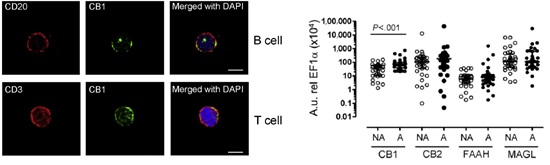
– Pérez-Diego M/Palomares O et al. JACI 2025; doi: 10.1016/j.jaci.2025.05.002. FI: 10,5
– Pérez-Diego M/Palomares O et al. Front Immunol 2023; 16;14:1147520. FI: 7,3
– Angelina A/Palomares O et al. Allergy 2021; 76:1900-1902. FI: 13,2
– Angelina A/Palomares O et al. Clin Exp Allergy 2022; 52(4):540-549. FI: 6,1
-Angelina A/Palomares O et al. Mucosal Immunol 2022; 15(1):96-108. FI: 8.0
-Angelina A/Palomares O et al. Allergy 2021; 76(6):1900-1902. FI: 13,2
2. Vaccine development and study of their immunological mechanisms of action in humans and mice models for the treatment of (in collaboration with Inmunotek S. L.):
i). Allergy (hypoallergenic and immunogenic vaccines with the capacity to generate healthy immune responses to allergens, i.e. Th1 and/or regulatory T cells (Treg)).

-Benito-Villalvilla C/Palomares O et al. Allergy 2022; 77(1):320-323. FI: 12,6
-Benito-Villalvilla C/Palomares O et al. JACI 2022; 149(1):212-222.e9. FI: 14,2
-Benito-Villalvilla C/Palomares O et al. Allergy 2020; 75:648-59. FI: 13,2
-Sirvent S/Palomares O et al. JACI 2016;158:558-67. FI: 12,485
ii). Infectious diseases (polybacterial vaccines able to promote the generation of suitable immune responses to prevent and treat recurrent infections, i.e Th1, Th17 or IL-10-producing T cells).
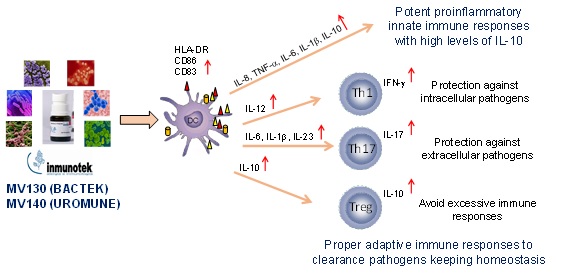
– Sevilla-Ortega C & Palomares O et al. Nat Commun 2025; 3;16(1):7129. FI: 15,7
– Martín-Cruz L & Palomares O et al. Allergy 2025; 80(3):677-689. FI: 12,6
– Martín-Cruz L/Palomares O et al. JACI 2024; 154(5):1085-1094. FI: 11,2
– Martín-Cruz L/Palomares O et al. Front Immunol 2022; 24;13:1066383. FI: 6,4
– Martín-Cruz L/Palomares O et al. Front Immunol 2021; 21;11:612269 FI: 7,6
– Cirauqui C/Palomares O et al. Eur J Immunol 2018; 48(1):180-193. FI: 4,248
– Benito-Villalvilla C/Palomares O et al. Mucosal Immunol 2017; 10(4):924-935. FI: 7,360
3. Study of the molecular mechanims involved in the mode of action of anti-IgE treatments (Omalizumab and Ligelizumab) and anti-TSLP treatments (Tezepelumab) with specifal focus on the capacity of these monoclonal antibodies to condition the functional properties of human DCs, including their capacity to generate functional FOXP3+ Treg cells in asthma, CSU and Crohn’s Disease.

-de la Rocha-Muñoz A/Benito-Villavilla C/Palomares O et al. Allergy 2025; doi: 10.1111/all.16517. FI:12,6
-Benito-Villavilla C/de la Rocha-Muñoz A/Palomares O et al. Allergy 2023; 78(4):1060-1072. FI:12,6
-López-Abente J/Palomares O et al. Eur Respir J 2021; 14;57(1):2000751. FI: 24,9
-Bousquet J/ Palomares O et al. Nat Rev Dis Primers 2020; 3;6(1):95. FI: 52,329
4. A tumor-associated heparan sulfate-related glycosaminoglycan promotes the generation of functional regulatory T cells. Study of the capacity of the tumoral carbohydrate A10 (Ca10) to immunoregulate human DCs and polarize functional Tregs in cancer.


– Martín-Cruz L/Viñuela M/ Palomares O et al. Cell Mol Immunol. 2023. 20:1499-1512. IF: 21.8
The group has experience and routinely uses many different techniques: cellular-culture procedures (human cell lines and primary cells), preparation of human PBMC, isolation of different blood cell populations, generation of humoDCs, staining of cells with labelled-Abs for flow cytometry and confocal microscopy, functional experiments with human blood cells, including functional metabolic and epigenetic reprogramming, in vivo mice models of allergic asthma, food allergy, atopic dermatitis, LPS-induced sepsis and vaccination, immunological techniques, labeling of antigens and Abs with biotin, fluorophores and other ligands, cloning and manipulation of nucleic acids, qPCR, RNAseq, scRNAseq, protein purification, chemical and spectroscopic analysis of proteins, analytical techniques, gene arrays, proteomic tools, systems biology computer programs and databases, etc.

 Oscar Palomares research group